Which One To Choose: Nissan Juke vs. Nissan Qashqai

Choosing between the Nissan Qashqai and Nissan Juke is a hard decision, but hopefully, this helpful guide will sort you out

Nissan’s two mighty small SUVs have been among the most popular models sold in ever since they graced our roads.

Not just because their looks shocked the average person because they were so angular and so not British, but because they were actually good. Really good.  

But which is right for you? Hopefully, our comparison review will help you to make a sensible and informed decision. 

Styling

You wouldn’t be wrong for thinking the Nissan Juke for sale is a spaceship at first glance.

Ever since it came out back in 2010, this small crossover has been the car of choice for small families and those wanting to experience the world of SUVs without getting a really big car. 

What makes the Juke so popular is its size and vast familiarity. It’s on the same level as a Ford Fiesta or Mini Cooper when it comes to recognition, which has really helped the brand become popular over here. 

On the other hand, the Qashqai comes across as a more serious version of the Juke. Not only is it a larger car, sitting in Nissan’s model line-up as a fully-fledged SUV, but it also feels more grown-up.

The most recent generation comes with more chrome body parts, higher-quality trim and an overall better interior. But it’s also available in some bright colours, so it’s not all that serious.  

What are they like to drive?

If you’re looking at buying a small crossover or SUV then there’s no doubt you’re after a smooth and easy ride.

Well, thankfully both the Juke and Qashqai offer just that. 

Nissan’s Juke SUV for sale is a very easy and fuel-efficient car to drive.

Because of the raised driving position, it’s even easier to see what’s in front of you – and that can be really helpful when navigating tight roads or reversing into a parking space.  

Early versions were available with both petrol and diesel engines, but newer models only come with the former – which we’d say is the better engine choice for this car anyway. 

Like the Juke, the Qashqai benefits from a higher driving position but it takes it one step further with a really great suspension setup, which ensures the car is really smooth over bumpy surfaces.  

It’s quiet too, despite having either a petrol or diesel engine under the bonnet.

But out of all the choices on offer, the smaller engine is the more desirable, mainly because it’s smoother, happier to rev, quieter and more economical.  

Interior and technology

With both these cars being Nissans, you can expect their interiors to be somewhat similar.

Both cars feature the brand’s NissanConnect infotainment system which is easy to use and crisp to view.

Newer Juke and Qashqai models get Apple CarPlay and Android Auto too, if you don’t fancy using the car’s system and just want to hook your phone up.  

There are many trim levels available on Juke models, including the Visia trim that gets you air-con, sports seats and six airbags.

Moving up is the Acenta, which has Bluetooth, a USB port and climate control. 

Tekna+ models get a DAB radio, air-con, cruise control, heated front seats, climate control and more – it’s really all you need. 

The Qashqai is also available with a variety of trim levels, ranging from the Visia to the top-spec Premiere Edition.

But no matter which one you opt for, you won’t be disappointed because the interior quality is on a par with its German alternatives. 

Boot space and practicality

If boot space and practicality are what you desire, then you’ll admire the Qashqai.

Being a full-size SUV, you expect there to be plenty of space back there – and there is.

Its boot measures in at 504 litres, growing to 1,447 litres with the rear seats folded flat.

On top of this, there’s lots of space available for backseat passengers and plenty of cupholders and storage solutions too. 

But just because the Juke is smaller doesn’t necessarily mean it’s not big enough.

In fact, it’s far from it. Its boot measures in at 422 litres, which is impressive for a small crossover SUV, and rear legroom isn’t too compromised.

Sure, it’s not as roomy as its larger sibling, but it’s still plenty for most people.  

Safety and reliability

Being a well-established Japanese brand, both these Nissans are going to be very reliable cars.

All of the petrol and diesel engines used are really solid and will continue to run smoothly for many, many miles to come. 

In terms of safety, both the Juke and larger Qashqai scored a full five marks following their most recent Euro NCAP crash testing.

This also showed great adult and child passenger safety scores – perfect for family cars. 

Dimensions:

Nissan Juke

Length: 4210mm

Width: 1800mm

Height: 1577mm

Boot space: 422 litres

Find a used Nissan Juke in South Africa.

Nissan Qashqai

Length: 4425mm

Width: 1835mm

Height: 1625mm

Boot space: 504 litres

Verdict: Nissan Juke vs Nissan Qashqai: which should you buy?

When it comes down to it, either way you go, you won’t be disappointed.

We’re sure you’ve come to a conclusion yourself after reading this, but if not, perhaps our verdict will help. 

We’d recommend choosing the Nissan Juke if you’re after something that’s nimble, not too big and sits nice and high on the road.

After all, there’s nothing worse than feeling cramped and small on a big motorway. 

However, if you’d rather have more space and extra practicality, then the Qashqai is by far the better choice.

This is a full-sized SUV that offers great levels of safety, is reliable and fits most families really well.

Have you ever seen a Qashqai and Doctor Who’s Tardis in the same room? No, because they are both the same practical vehicle.   

.

.

.

Source: https://www.cinch.co.uk/

Nissan Passes 11 million Vehicle Milestone At Sunderland Plant

The Wearside motor manufacturer has produced a car every two minutes for the last 37 years

Nissan has marked a manufacturing milestone after the 11 millionth car rolled off the production line at the Sunderland plant.

The landmark figure means that on average a new car has rolled off the line at the factory every two minutes, every hour of every day, for 37 years. The 11 millionth car to be made at the site since production lines first launched in 1986 was a Blade Silver Qashqai e-POWER, one of three electrified models currently being built at the plant. The first car was a white Nissan Bluebird, which took about 22 hours to build. Today, a top of the range Qashqai e-POWER takes about 8.5 hours.

Adam Pennick, vice president of manufacturing at Nissan Sunderland, said: “This milestone reflects the vast experience that our world-class manufacturing team has in delivering the quality cars that our customers love. We’ve come a long way since production first started with some iconic models on the way. But we’re always looking forward, and our fully electrified range and EV36Zero plan mean we have an exciting and sustainable future ahead.”

The car is destined for a customer in France, which is just one of the 137 global markets the North East plant currently serves. The 11 million is made up of nine different models, with 22 variants. Four models – Qashqai, Micra, Primera and Juke have gone past seven figures – with Qashqai the all-time highest at more than four million.

Last year Qashqai was the UK’s best-selling new car – the first British built model to win the award in 24 years. The UK’s largest car manufacturer by volume, Sunderland Plant is home to a workforce of about 6,000 people. It also supports a further 30,000 UK jobs in the supply chain, with about five million parts arriving every day at the plant.

Last summer Qashqai e-Power and Juke Hybrid both went into production in Sunderland which, added to the all-electric Nissan Leaf, means the full range at the plant is electrified. So far more than 50,000 Qashqai e-Power and 20,000 Juke Hybrid have been built.

The plant is also moving forward with its EV36Zero project, which consists of three main elements: a new electric vehicle, a 12GWh gigafactory with the company’s battery partner Envision AESC, and a microgrid to deliver 100% renewable energy to Nissan and suppliers.

Construction started at the end of last year on the £450m project to create Envision AESC’s new battery plant serving Nissan, 10 years after it started electric vehicle battery production in the UK, with the first electric vehicle battery built back in 2012 to support production of the first generation Nissan Leaf.

Imagine if the manufacturing plant in South Africa starts pumping our cars this well – Nissan dealers wouldn’t have to worry about stock shortages or struggles to keep up with Nissan vehicle demand.

.

.

.

.

News shared by https://simplysoldonnissans.weebly.com/blog/nissan-passes-11-million-vehicle-milestone-at-sunderland-plant

Nissan Set To Discontinue The NP200 Next Year

Nissan South Africa will stop producing the NP200 half-ton bakkie in March next year, says Nissan SA country director Kabelo Rabotho.

This follows 16 years of production at Nissan’s Rosslyn plant, in Pretoria.

March will then also signal the end of the popular half-ton bakkie as a product in South Africa, despite Volkswagen, Renault and Toyota hinting at possible new model introductions in this segment.

South Africans for many years had various half-tonners to choose from, including the Ford Bantam, Fiat Strada and Chevrolet Ute.

There is little doubt that Nissan SA will feel the loss of the more affordable Nissan NP200 compared with the one-ton products, with the NP200 recording three-digit sales every month.

Production of the Navara one-ton bakkie will continue.

“No immediate replacement model is planned, although Nissan is currently evaluating other alternatives in line with the ambitions of its Africa mid-term plan,” says Rabotho.

He adds that “Nissan remains fully committed to South Africa and the wider continent as the last frontier of the automotive industry”

Rabotho says the Rosslyn manufacturing where the NP200 is made plant remains Nissan’s light commercial vehicle hub for Africa, with the locally produced Navara pickup a core model that “will enable Nissan’s ambition across the continent”.

.

.

.

.

Info sourced from https://www.engineeringnews.co.za/

Why Nissan Stopped Making The Cutest Nissan Micra

That cute little Nissan Micra for sale you knew as Nissan removed this entry-level small city car from the SA market a few years ago, but why?

After removing the GT-R from the local line-up, Nissan South Africa did the same with the Micra passenger car, with customers now only able to buy the hatchback as a pre-owned model. The Micra was first introduced locally in 2004, with the third-generation serving as another offering in SA’s highly competitive B segment alongside the likes of the Volkswagen Polo, Renault Clio and Kia Rio. 

The Micra actually had a prolonged period on the production line (18 years, to be exact) in SA, then a further two generations, of which the K14 chassis was the last. That model was powered by a turbocharged 1.0-litre petrol engine that produces 84kW and 180Nm, with a six-speed manual transmission sending power to the front wheels. 


Goodbye, sweet Micra 

The Almera, Magnite, Qashqai, X-Trail, Patrol, NP200 and Navara currently serve as the Japanese brand’s new offerings available in our market. 

It’s clear that Nissan prioritises what works and what doesn’t, with electric mobility now clearly at the forefront. Though it remains a rumour at this point, the next GT-R could become a ‘victim’ of electrification. Nissan has not yet confirmed if a hybrid or electrified version of the Micra would eventually head to local shores.

Perhaps the writing was on the wall for Micra. Using June 2022’s National Automotive Association of Manufacturers in South Africa (Naamsa) monthly sales as a bookmark, Nissan only sold 9 Micras in June. Then, only five units in July and four models in August. That doesn’t make for good reading, and when models perform poorly, they tend to get the boot – sometimes never to return again. 

The small Nissan Micra car for sale was a cute city car and we hope someday Nissan decides to bring it back to SA.

.

.

.

.

Info shared from https://www.news24.com/

Nissan’s New Upstyled Magnite Red Edition

Nissan is offering customers the chance to snap up its racy new Magnite Red Edition.

Based on the popular Magnite Acenta, this limited edition Nissan Magnite model stands out with a plethora of sporty red accents that help to accentuate the crossover’s curves and edges. Nissan has also bolted on a set of red brake callipers, fitted exclusive badges and graphics package as well as pimping the tailgate with an eye-catching chrome finisher. Customers can choose between two exterior paint colours – Onyx Black or Storm White. 

The Magnite Red Edition’s interior is amplified by stylish red accents, a red-themed dashboard as well as LED scuff plates. Wireless charging is also included as standard as is an eight-inch touchscreen infotainment system compatible with both Apple CarPlay and Android Auto, hill start assist, traction control, ABS, cruise and hill descent control. 

Powering the stylish newcomer is Nissan’s 1.0l three-cylinder turbocharged petrol engine pushing out 74kW and 160Nm of torque when paired to the five-speed manual gearbox. Opt for the Continuously Variable Transmission (CVT) and maximum drops to 152Nm.

At the time of writing only 600 units of the Nissan Magnite Red Edition have been earmarked for the South African market with prices starting at R302,900 in 2023. This includes a comprehensive six-year/150,000km warranty and a three-year/30,000km service plan. 

.

.

.

News shared from https://www.timeslive.co.za/motoring/

Nissan Navara DC Bakkie Review

Hold off on the fancy bits, but go full-send on the upgraded suspension, tyres and bolt-ons. The modified Navara will appeal to those with a smaller budget but also feels like a well-honed (and well-executed) off-roader that’s ready for action.

All killer, with no filler. Or something like that, anyway. Imagine the Nissan Navara entry-level variant with some mechanical upgrades seen on the Navara Pro-4X, but do without the other nice-to-have stuff.

So you’ve got big all-terrain tyres, upgraded suspension, bar work and an increased GVM – matched to cloth seats, rubber flooring and pared-back tech.

It’s a breath of fresh air. When all other bakkies are gunning for new decor, improved comfort and increased technology, this Nissan Navara bakkie will feel like it is zigging against the zags. Does it add up, though? Could this modified Navara strike the right balance and be a four-wheel driver’s best friend?

One thing that’s certainly in its favour (in comparison to the more comprehensively performance-oriented Ranger Raptor) is the fact that the Nissan Navara DC keeps a very healthy price gap

And don’t forget that the Navara range holds a healthy payload and full-fat braked towing capacity, something that the Ranger Raptor cannot match.


How much space does the Nissan Navara have inside?

Inside the Navara, your experience is all classic Nissan Navara. Albeit, it’s a base specification.

While many ute buyers might like the idea of – of feeling accustomed to – the feel of fancy leathers and the sight of some embroidery, there often isn’t much wrong with a base-specification offering.

And in this case, you are forced to look more acutely at things like storage, practicalities and ergonomics. From that point of view, the Navara is a solid base that makes a good value-for-money case.

The seating position feels relatively high and lacks a little bit of adjustment that you can see in other four-wheel-drive utes. It’s also the same case in more expensive variants, so you’re better off saving your money.

The build quality feels good overall, and the combination of hard plastics, cloth, and vinyl materials lends it well to a life of serious usage. Both weekday work and weekend recreation.

There is a USB and 12V power outlet up front, with a handy spot for your wallet, along with the same again (plus with a USB-C point) tucked away in the small centre console. Smaller smartphones will fit in the storage slot, but larger ones will sit somewhat awkwardly.

The button blanks that sit in front of the cupholders are a reminder that you didn’t splurge on a higher-specification model, but will also work well for those who are eyeing off some accessories like a winch, extra lighting, or other 12V goodies.

The second row of the Navara is reasonably spacious and comfortable – as far as dual-cab utes go – and would work for a part-time split between family and work. There are air vents for back passengers but no power outlets.

The amount of legroom and headroom is around on par with other utes in the segment, and bottles can fit indoors. The storage slot below the air vents is very small, but a fold-down armrest in the middle seat does free up some extra space.

The tub of the Navara benefits from a drop-in-style tub liner, and misses out on the (purely aesthetic) sports bar of more expensive variants. There are four tie-down points in here, but no adjustable load rail or power outlet.

Does the Nissan Navara Navara have Apple CarPlay?

Infotainment in the Navara comes via a good quality 8.0-inch infotainment display, which was upgraded to Nissan’s latest in the recent round of updates to the Navara platform.

It’s a good one as well. The base Navara misses out on some elements such as native navigation and digital radio, but the important inclusions of wired Apple CarPlay and Android Auto are there, and the operating system is easy to use. Some physical buttons on each side of the screen help with navigation, and the two dials, one for volume and one for tuning, are always an important inclusion.

However, this base spec doesn’t skimp on size and screen clarity, and you get a good 7.0-inch colour multifunction display in front of the driver. Another important point to note here is that during our time with the car, the infotainment system worked without any issues.

Is the Nissan Navara Navara a safe car?

Nissan’s Navara scored a five-star ANCAP safety score back in 2015 when requirements were not as stringent as they are today. There are seven airbags inside, along with autonomous emergency braking and forward collision warning.

However, lower-spec Navara models (including this Navara) miss out on the more comprehensive suite of active safety equipment: lane-departure warning (and collision avoidance), blind-spot monitoring (and avoidance), rear cross-traffic alert, and tyre pressure monitoring are missing from this cheaper variant.

The Navara base variant also misses out on reverse parking sensors and the surround-view camera system.

Is the Nissan Navara Navara fuel-efficient?

Nissan’s 2.5-litre Intercooled Turbo diesel engine is a relatively frugal operator, and uses an additional turbocharger to make up for the relatively low overall capacity. But with a seven-speed automatic gearbox, the Navara has often been one of the more efficient in the range of four-wheel-drive bakkies.

Although, the taller all-terrain tyres and the additional weight from accessories would make this Navara a little less efficient in comparison to a more ‘standard’ Navara.

In comparison to the claim of 7.9 litres per hundred kilometres, we got 9.2L/100km overall in our test drive, which included highway driving, off-roading and cruising around town.

What is the Nissan Navara Navara like to drive?

The improvements to the Navara through suspension upgrades – along with Nissan’s constant fettling with the platform over the years – have resulted in a vehicle that is better in every regard for the driver. Not just off-road, where the benefits are more obvious. The on-road driving experience is better as well.

There’s a 40mm ride height increase, along with a 30mm increase in track width from the Navara’s new wheels. More height might not sound like a good start for road-going characteristics, but the net gains are certainly in the Navara’s benefits.

Mostly, it comes from ride quality. It feels both more cosseting and assured at the same time, able to soak up larger bumps smartly but feeling more connected and communicative. It combines well with the steering feel, which is still hydraulically assisted in the Navara.

The 2.5-litre, four-cylinder diesel engine feels quite willing from the get-go, combining well with the seven-speed automatic gearbox to provide smooth and easy performance.

Only when up at highway speeds, and looking to get even more out of the powertrain through overtaking, does the engine start to feel like it’s working overtime. The torque in the lower middle rev ranges is good, but power at the top end of the range is less impressive under heavier loads. We have noticed this before when towing heavy loads, where the Navara’s performance isn’t as impressive as other utes in the segment.

Off-road, the combination of good torque and good gearing makes the Navara feel happy at low speeds. A crawl ratio of 44.5:1 is good for a standard four-wheel drive, and when combined with a softly tuned throttle, it allows the driver to negotiate tricky obstacles with a controllable low speed.

The additional ground clearance is of clear benefit, along with better (and taller) tyres giving much more assuredness to the driver over obstacles. Aside from a Ranger Raptor and Jeep Gladiator Rubicon, this would be one of the better off-road utes off the showroom floor.

Another small element that the Navara misses out on is the ability to select different driving modes – including an off-road mode. It’s a nice thing to have, and no doubt heralds driving modes as a more common inclusion amongst future utes.

However, we also didn’t mind not having it. A locked rear differential working in conjunction with effective traction control, good underbody clearance and supple, balanced suspension makes the Navara one of the better utes off-road. This is only improved with the Navara treatment.

There is some nice attention to detail underneath as well. The shape of the rear differential (complete with diff breathers) is complementary to off-road ground clearance, and there are no side steps or leaf spring perches to worry about getting hung up on. It’s a genuinely good bakkie off-road.

Higher-speed off-road driving – on rough dirt roads and fire trails – also yields benefits. This isn’t something that will keep up with a Ranger Raptor, but it’s significantly more capable, comfortable and composed in these conditions. And considering the kind of buyer I have in mind for this vehicle this is an important point.

Should I buy get Nissan Navara like this?

This Navara works well overall. Aside from missing out on some important safety technology, cost-saving omissions made on this vehicle don’t seem to detract from the base offering.

And in some cases, it allows the elements of suspension, bolt-ons and better rubber to shine even more.

The Navara platform is getting old these days, but it’s still a nice car to spend time in. It steers nicely (for a ute), and the Navara’s coil-spring suspension at all four corners is made even better by the Navara treatment.

Parts of this car will always live in the shadow of the Ford Ranger Raptor as a serious off-road offering. But because of those cohesive suspension and tyre improvements (along with important details like the GVM upgrade and redesigned tow bar), you’ve got something that’s more compelling to core four-wheel-drive wants than a Toyota HiLux Rogue and its widened wheel track.

And don’t forget, the thousand-kilo payload and 3500kg braked towing capacity will be welcome news to those who want to use their utes more seriously in a professional or recreational manner.

However, the main competition for this Navara Navara won’t be from other bakkies, but rather from the Navara owners and the aftermarket industry. 

.

.

.

Review shared by https://wheelsgalore.postach.io/post/nissan-navara-dc-bakkie-review

The Inspo Behind Nissan’s Magnite Compact SUV

Asian automaker Nissan’s Magnite SUV boasts a sub-four metre design that offers a stylish, feature-filled yet affordable car.

Originally A Datsun

Evident from the signature grille on the concept, the Magnite could’ve been a Datsun vehicle but instead, it became an affordable Nissan car, making the Magnite a pleasing hybrid of two design languages.

Designed by Japan

Nissan’s designers seem to have put their heads together to design the right car for the market, even making considerations like extra legroom in the backseat and making a less boxy design than usual.

​Kabuku, Sui, Inase

The Magnite’s design incorporates three elements from Japanese culture, Kabuku – meaning a pioneer, Sui – meaning purpose – and Inase – meaning vibrant.

​Under the hood

Nissan offers the affordable Magnite with a choice of two 1.0-litre petrol engines – a 54 kW naturally aspirated one and a 71 kW turbocharged unit – mated to a five-speed manual gearbox – both options offer an automatic version.

.

.

Info reshared from https://simplysoldonnissans.weebly.com/blog/the-inspo-behind-nissans-magnite-compact-suv

Nissan Almera Sedan Used Sedan Review

When Nissan developed the second-generation Almera, it had to not only counter the threat from increasingly sophisticated hatchbacks but also had to prove itself attractive in the face of competition from the burgeoning mini-MPV sector. The standard Almera’s versatility certainly scored on the first criterion making a late-used Almera far more in demand than the first-generation car ever was. An affordable Nissan with inbuilt desirability? You’d better believe it.

History

Whilst the original Almera was a worthy offering, perhaps the British public took the initial advertising campaign somewhat at face value. Indeed ‘The Car They Don’t Want You To Drive’ was in fact scarily prophetic. If they didn’t want us to drive it, who were we to argue? Besides, the prospect of driving a car with a roofline that resembled the flight deck of the USS Carl Vinson didn’t exactly fill us with anticipation.

The 2000 model-year car changed the way we perceived the Almera. Gone was the gawky styling and uninspired interior. In its place was a car that was confident and mature with a far more European feel and fit and finish to rival anything emerging from Germany. Prices were very competitive and with a revised engine lineup and a range of six standard trim levels as well as Activ value editions, the Almera has exceeded Nissan’s modest expectations. In late 2001 a four-door saloon version was announced to a market which has traditionally shunned the idea of booted hatches. A year further down the line, Nissan facelifted the Almera, changing the bumpers and grille for a more Primera-like appearance. The trim designations were altered, pricing was made more aggressive, the engines were tweaked slightly and the Primera’s N-FORM dashboard was fitted to all but the base models. Soon thereafter, Internationally, Nissan added a common-rail 101 kW 2.2-litre dCi diesel to the Almera line-up available solely in a new top-of-the-range SXE trim designation. It also revisited the SVE trim level, adding DVD-based satellite navigation. In spring 2003 Nissan added a pair of special edition models to the range, the Pulse and the Flare. None of the Nissan Almera models made it to South Africa.

By the start of 2006, the Almera was starting to look decidedly dated next to modern family hatch rivals. The range was slimmed down to just one engine option (the 1.5-litre petrol) and two variants – a manual and an Auto.

What You Get

Inside, the Almera has moved up a class, with a quality feel reminiscent of something much more expensive. That probably won’t be what you remember, however, after the salesperson guides you around the ‘super utility’ interior which is filled with clever touches. Not all of them are new, but how they’re executed is better than anything family buyers have seen to date.

There’s the sunglasses holder by the rearview mirror trimmed in fabric so as not to damage the lenses with constant use. The centre console glovebox with a tissue holder built into the lid. A 12v power socket mounted on the console is as easily accessible by the kids for their Gameboys as by Dad for his ‘phone. A ‘curry hook’ in the front passenger footwell for your takeaways that retracts when not in use to avoid snagging your legs.

Storage spaces abound – there are over 20 around the interior – ranging from a washable rear garbage holder for sweet wrappers to sill trays sculpted for a can of de-icer and front door pockets designed to take thick atlases along with huge bottles of fizzy drink. There are two ‘secret boxes’ for valuables (one hidden under cup holders in the centre console and another beneath the rear floor) and a compartment for colouring books and pens built into the rear centre armrest (which also includes two more cup holders).

Then there are the really unique touches. The twin luggage nets that hold oddments in the side of the boot can be joined together and stretched across the load floor to stop larger items from sliding about. Then there’s the umbrella holder – velcro straps that fasten the item to the front of the rear seat cushion. You can also fasten your briefcase or laptop computer in the same place, thanks to a retractable briefcase strap. The idea, says Nissan, was to make climbing into your Almera feel like coming home.

Ambitiously, they also wanted the car to be one you’d feel proud to have sitting on your driveway – not thought likely to occur to owners of the previous Almera or its predecessor the Nissan Sunny. Still, thanks to what the stylists call “one of the most innovative and spirited looks we’ve ever created,” they may even have succeeded. Because it’s wider, taller and longer than the car it replaces, this model sits with a greater sense of purpose accented by what’s called a ‘surf-tail’ kicked-up roofline.

The shape’s practical too, with plenty of headroom and decent space for three across a comfortable back seat that split-folds to reveal 355 litres of space (25 litres more than a VW Golf). In the front, provided you specify the optional side airbags, the seats can be fitted with Active Head Restraints that reduce whiplash injury if you’re hit from the rear. This is a possibility because the braking performance has been much-improved thanks to a ‘Brake Assist’ system that reduces the pedal effort required to activate the ABS by around 30% in an emergency.

Used Almera Price

Each secondhand Almera’s price will depend on the model year, mileage, physical condition and even transmission. To get an idea of the price of a standard Nissan Almera – browse the used stock offered by a Nissan dealer.

What To Look For

You’d probably be shocked if we were to catalogue a litany of fundamental faults with a Nissan. It isn’t going to happen. The only boring thing about the second-generation Almera is its metronomic reliability record.

Replacement Parts

Consumables for the Almera are reasonable, although prices crank up for more specialist parts. 

On The Road

On the road, as we’ve suggested, the car’s very good to drive – a quality promoted in the latest model by a body that’s 30% stiffer than before. The gearbox is positive but a bit vague, a pity since all three engines feel very willing. The 1.8 petrol is the fastest engine currently on offer, making rest to sixty in 11.1s en route to 185km/h. Don’t ignore the new turbodiesel if you’re so inclined though: it takes a little time to get going but once it does, you can hustle it along quite rapidly – and get over 1,600 km on a tankful. The handling is superb with plenty of grips and good feedback from the chassis. The light clutch and steering make the Almera effortless to pilot through town.

Overall

If you could combine Japanese reliability with German interiors and French driving characteristics that would make quite a car. Fortunately, Nissan has taken the effort out of such a task with the Almera sedan. It’s not the obvious choice but it’s up there with the class leaders. Unexpectedly recommended.

.

.

.

.

Review amended from https://www.rac.co.uk/

End Of The Road For The Popular Nissan NP300

Production of the Nissan NP300 bakkie for sale halted in favour of the new Nissan Navara range

There was a sense of inevitability early in 2021 when Nissan SA announced the latest delay to the introduction of its new Navara bakkie range. It wasn’t just that this was the second launch postponement in eight months but also that it further prolonged what has arguably been the longest gestation period of a new vehicle this century.

The Navara, the result of a R3bn investment in the company’s vehicle assembly plant in Rosslyn, Tshwane, should have gone on sale late 2020. In June, however, the company said production start-up problems caused by the pandemic had forced a postponement until the first quarter of 2021. Then it was postponed again, to June 2022. Now, the NP300 for sale has officially been discontinued and only used models can be bought.

.

.

.

News found on https://www.businesslive.co.za/

Apparently, Datsun Is Dead Again

50 Years After It Captured South African Hearts

Datsun is gone again, this time perhaps for good.

In 2019 Nissan, including in South Africa, downplayed early reports that the Datsun brand was on the chopping block. By 2020 – and with the line discontinued in Russia – the company admitted that things hung in the balance, but wasn’t oozing worry.

“Datsun may be a small player in Nissan’s overall portfolio but it has achieved GOod sales in South Africa due to the economic climate,” Nissan said at the time.

But this came the news, as the final Datsun production line was shut down in India, that the Tokyo headquarters had no plans for further vehicles under that brand. In places such as the UK, stock will still be sold, but in South Africa Datsuns were already not for sale, said Nissan.

The Datsun name was wound down in the 1980s, then revived, with a launch in South Africa that came in 2014, for low-cost city-runabouts in developing markets that included Indonesia.

The plan was not a great success by any measure, and Nissan reportedly wants to focus its attention on retooling for electric vehicles, rather than keeping alive an old brand tied to petrol glory days.

This is how Datsun came to be a key brand in South Africa, then disappeared.

Datsun became a Japanese champion in South Africa in the 1960s. Then it became a local one.

When Datsun launched the GO in South Africa, it focussed heavily on its long, long local history.

(The 1932 Datsun Type 11 was one of the first produced under that name in Japan.)

And that remained at the core of the brand message: South Africa trusted Datsun before, and now that it had returned to SA, could do so all over again. And, again, affordability would be key, with the Datsun GO price most recently an R184,600 starting price.

The first Datsuns were imported in the 1960s, cheap. Local assembly soon followed, and by the mid-1980s what was then the Nissan 1400 bakkie was considered 100% locally manufactured.

That was key during the time of Apartheid sanctions, and one reason the “kanniedood” (can’t be killed) bakkies proliferated in South Africa and immediately beyond.

The Datsun bakkie that drove a generation.

What started as the Datsun 1200 in 1971, and became the Nissan 1400 in a later iteration, went on to sell more than a quarter of a million units in South Africa. The version made exclusively in South Africa remained on sale until 2008 when it became untenable for reasons that included safety.

At times the Datsun 1200 and 1400 undercut the competition on price to a ludicrous extent in its half-ton class. It was made in flashier leisure versions, and in styles more likely to attract entrepreneurs.

The Datsun 140Z you would hear before you see it.

The “groovy” 1970s Datsun 140Z “was a car that you would often hear before it arrived“, and that was part of its sex appeal. 

The massively successful Z series played an important part in cementing the names Nissan and Datsun outside of Japan, car historians say, and their popularity also made them too rare to be found in South Africa. 

So in the mid-1970s, Datsun South Africa created the 140Z out of the 40Y GX coupe. 

The success of that model, including in motorsport, spurred the creation of the 160Z.

When Datsun was top of the world – then wasn’t.

Between affordable bakkies and highly desired passenger cars – and the household names such as the 120Y and SSS models – Datsun was the top-selling brand in South African vehicles between 1976 and 1978.

But complex politics at play in Japan and in key markets such as the United States were already working against that name. By the early 1980s, an official decision had been taken to prefer the name Nissan over Datsun. 

The rebranded vehicles remained a feature of South African roads, but new Datsuns could only briefly be had in the early 2000s, as a short-run model in Japan – and then again from 2014 when the low-cost Datsun GO line was launched. 

.

.

.

News posted on https://myheartbelongstonissan.over-blog.com/2022/09/apparently-datsun-is-dead-again.html

Nissan Navara Review: New Range Updates

Nissan updated their Navara range in 2021. Since the third generation of the Navara was launched, there have been a number of upgrades and Nissan gave it another facelift including additional safety features, new styling touches and some comfort features.

Nissan has seen a general move toward the more up-market variants in bakkies. Not surprisingly then, they dropped the base models and retained the higher-specced Navara models. The top-of-the-range fourth option in the line-up is called the PRO-4X.

This Nissan Navara review discusses the upgrades that the range received on the 3rd generation, for the current 4th generation Navara range.

Nissan Navara Update Exterior

The cosmetic changes to the outside of the car are:

  • New Bonnet
  • Interlocking front grille
  • New wheel design across the range
  • Quad-LED Headlamps
  • New front bumper and facia
  • A new rear-designed rear tailgate with the word “Nissan” boldly across the bad.
  • A new design for the tub.

The result is a more aggressive look with modern touches, particularly the headlights – resulting in a stronger look.

The latest top-of-the-line hero variant is the PRO-4X. The only extra feature for off-road performance is to have all-terrain tyres. But there is a fair amount of bling to the exterior including:

  • Fender flares
  • Roof Rails
  • Darkened exterior theme
  • Unique black stainless steel double tube sports bar
  • Dark-themed wheel design
  • Stealth Grey Premium paint option

Nissan Navara Update Interior

There were not a lot of changes in the interior. The cup holders that were set low down from the driver and passenger have been removed. Nissan says they have also increased the seat comfort for the second-row passengers by providing more sculpture seating.

 Nissan Navara Update Features

In terms of features, Nissan is making the most noise about the Genuine Accessories that you can add to your vehicle including:

  • Off-Road Bull Bar
  • Front Sports Bar
  • Soft Tonneau Cover
  • Tub liner
  • Snorkel
  • Rear Ladder rack
  • All-weather Floor Mats
  • Towbar (Standard on the ST-X and Pro-4X – max braked towing capacity: Diesel = 3500 kg)

Nissan Navara Update Engine and Drivetrain

The drive train was upgraded to the 2.5 litre diesel (and one petrol) engine, with either a 6-speed manual or a 7-speed automatic.

Nissan Navara Update Driving Experience

The launch day included driving several dual cab models: one with an unloaded vehicle; one with 350kg in the tub; and one towing a trailer with a load and a gross weight of about 1,000 kgs plus 100 kgs in the tub.

Based on the review of the Nissan Navara – the vehicle was quite comfortable with the various loads and in fact, while 350 kgs holds back the performance a bit, it makes for a slightly better overall stable ride.

Nissan Navara Update Safety

In order to strive for a five-star crash test rating, it is not surprising that Nissan added some safety features to the Navara.

All models now get:

  • Forward Collision Warning
  • Emergency Braking, and
  • Driver Alert

Higher grades get:

  • Blind Spot Warning and Intervention
  • Land Departure Warning and Intervention
  • Rear Cross Traffic Alert
  • Reverse Parking Sensor
  • High Bean Assist
  • Automatic Rain Sensing Wipers

Nissan Navara Update Verdict

The Navara remains a competent bakkie with variants for work and/ or family. This upgrade, irons out a few more things and provides some extra safety features that are comforting to know for private and commercial buyers.

.

.

.

Review sourced from https://nissandriversclub.blogspot.com/2022/08/nissan-navara-review-new-range-updates.html

Choosing Between The Nissan NP200 Diesel And Petrol Options

Nissan’s NP200 light commercial bakkie for sale is currently the only competitor in the three-quarter-ton market, after the withdrawal of Ford’s Bantam and then the Chevrolet Utility. That left an important and lucrative vehicle category open for Nissan to dominate – again.

The Nissan NP200 bakkie came roaring out of the blocks in 2008, as a replacement for the most famous small bakkie in South African history: the rear-wheel-drive Nissan 1400 (Champ). For an article debating whether this new front-wheel-drive Nissan is a worthy successor to the legendary 1400, click here.

Despite many fans mourning the demise of the old 1400, the NP200 immediately established itself as a major player in the so-called three-quarter ton market, thanks to its class-leading payload.

The NP200’s strongest suit is lots of space

The NP200’s roomy load bay is rated for 790 kg, and combined with a spacious cabin, it immediately attracted plenty of buyers away from its initial rivals, the Opel Corsa Utility and the Ford Bantam.

Alas, the Bantam disappeared from our market in 2011, after the introduction of the new-generation Ford Ranger saw the entire Ford plant at Silverton, near Pretoria, reconfigured around Ranger production. And, as the Bantam was a unique design to South Africa, no global replacement could be found, so Ford withdrew from this segment altogether.

That left the three-quarter-ton market contested by just two players: the NP200 and the Corsa (which soon morphed into the Chevrolet Utility and then returned for a short-lived third generation). But, following General Motors’s withdrawal from the South African market in early 2018, the NP200 suddenly had the entire sub-one-ton pick-up market all to itself.

The only player in its segment

As the only contender in its class, Nissan quickly set about upping production at its Rosslyn plant to cater for increased demand, and currently, the Nissan NP200 for sale sells at a rate of 1 400 to 1 700 units a month. There has been talk of new a three-quarter ton bakkies from rival manufacturers coming in to challenge the little Nissan, but none of them has materialised thus far.

Current Nissan NP200 model range

A year after its initial arrival in 2009, Nissan introduced a wider range of engines for the NP200, to supplement the 1,6-litre eight-valve petrol engine with which it launched. A 1,6-litre 16-valve petrol engine and a 1,5-litre turbodiesel were added to the mix, and that engine line-up remains pretty much intact today.

Price-wise, the current range kicks off with the original eight-valve 1,6-litre petrol derivative, starting at R209 900. This engine produces 64 kW and 128 Nm of torque. This variant includes 2 airbags and ABS brakes – things that were absent from the entry-level NP200 in the beginning, but are now included across the range. Opting for factory-fitted air conditioning adds R20 000 to the base trim’s price.

There were two diesel variants at the top of the range, again available in the two main trim levels (“Safety Pack” and “High”), with the top diesel trim being the most expensive offering in the NP200 range. Engine output for both diesel NP200s is 63 kW and 200 Nm of torque, courtesy of the Renault-sourced K9K 1.5-litre, 4-cylinder turbodiesel.

Apart from its superior torque delivery, the diesel engine also offers a fuel consumption reduction of about 25 per cent over the petrol models, with a claimed average consumption of 5.3 ℓ/100 km against the 1.6i 8V’s claimed 8.1 ℓ/100 km and the 1.6i 16V’s claim of 8.0 ℓ/100 km. Pricing for the diesel models was however much steeper than they are for their petrol equivalents.

Buying a used NP200

One of the advantages of buying a Nissan NP200 is that spares are never going to be a problem, thanks to its strong sales figures. Another plus point is that the model range has remained essentially unchanged since 2009 – barring the standard fitment of the Safety Pack on later examples. This makes Nissan NP200 models attractive to buyers in the second-hand market.

Which would we choose: petrol or diesel?

While the diesel engine option in the NP200 offers the most torque and uses the least fuel, and is thus most suitable for transporting heavy loads and business use, private buyers would likely prefer the higher-output 16V version of the 1,6-litre petrol engine. It is a typically sweet-revving Nissan engine, whereas the diesel engine is a bit rough and noisy in this application.

In the longer term, when it comes to maintenance, petrol engines are also the better bet if engine trouble rears its head. Those common-rail diesel parts are not cheap to replace if they go wrong when mileages creep up above the 200 000 km mark.

So, despite the fact you’ll be using more fuel with a petrol-engined NP200, for us, this is the better option. The initial cost for a petrol-engined NP200 is also significantly cheaper, which further sweetens the deal for private users.

.

.

.

Info sourced from https://www.autotrader.co.za/cars/

Should You Buy A Big Or Small Car?

Not sure whether to go big or small when buying your next car? Here are several questions to ask yourself that could help you decide which vehicle is more practical for your needs.

What’s your budget?

If you’re looking to save money, a small car is your best option. Small cars generally have better fuel economy and are cheaper to insure. Many small cars are popular amongst young drivers on a budget for this reason such as used Mini hatch cars. Big cars are better for those with a bigger budget – not only are they more expensive to purchase, but they’re also more expensive to insure and burn up more fuel.

Where do you live?

The type of location in which you live might also determine whether a big car or small car is better suited to you. If you live in a city, it’s likely a smaller car will be more practical. Small cars are better for coping with narrow streets, plus you’ll be able to take advantage of small spaces for parking. If you live in a rural location meanwhile, a bigger car is likely to be more suitable. Bigger cars generally have more ground clearance, making them better at dealing with rough terrain.

Do you need the space?

Space is a big factor to consider. Smaller cars are likely to have smaller boot space. If you need to carry lots of belongings around with you whether this is work equipment or luggage, a bigger car is certain to be more practical. Bigger cars may also be better suited for carrying add-ons such as a roof rack or a bicycle on a bike rack. Those with big families might also have no choice but to buy a bigger car. Some small cars may still have three seats in the back, but in some cases, this middle seat is basically unusable.

Will you be driving long distances?

The distance you plan to regularly travel may also help you determine whether a bigger or smaller car is right for you. If you are planning road trips, you’ll want a bigger car as it will have more legroom and more space for luggage. Some bigger cars can also have good mileage. Smaller cars are less spacious and could become uncomfortable on long journeys for multiple passengers. On average, they are a little speedier, so you may be able to get to your location quicker. That said, a small car may get weighed down if you’re carrying lots of luggage and passengers taking away some of this speed, whilst a bigger car is less likely to be affected.

.

.

.

Article sourced from https://www.flushthefashion.com/culture/

The (Now Used) 2021 Nissan Navara Review

The 2021 Nissan Navara for sale brought the biggest change to the Navara range since this model was introduced in 2015, with a new look and more technology.

All sheet metal from the windscreen forward was new, as well as the bold bumper and grille and redesigned headlights. And Nissan also spent some money on new rear fenders and tail-lights.

The interior is the same as before, but the new steering wheel and digital instrument display are welcome changes.

Given that bakkies and vans have a model lifecycle of about 10 years, this is likely the last major update to the Navara until a new generation arrives four or five years from now.

The cheapest models in the range are the flagship STX and the top-spec model is the Pro-4X.

At launch, the RRP for the Nissan Navara line-up showed prices had risen across the range and are closer to – or in excess of – newer and better-equipped rivals.

The 2021 Navara line-up has been streamlined, and now starts with the base model SL, available as a two-wheel drive cab chassis with a single turbo 2.3-litre diesel.

While the most basic Nissan Navara now comes with autonomous emergency braking it doesn’t get the full suite of advanced tech.

All models come with seven airbags (as before) and this model is eligible to carry its five-star safety rating from 2015, even though the criteria have become tougher since. Radar cruise control is not available on any model, despite the large sensor on the grille (instead it is used solely for autonomous emergency braking).

Other Nissan Navara SL models – such as the extra cab and double cab 4×4 variants – gain the twin-turbo 2.3-litre diesel fitted to the rest of the range, although power and torque remain unchanged from before at 140kW and 450Nm.

The Nissan Navara ST gains the LED headlights and tail-lights, alloy rather than steel wheels, and rear privacy glass, plus a few other features.

From the Nissan Navara ST and up, all models come with extra safety tech such as lane-keeping assistance, rear cross-traffic alert, blind-spot warning and a 360-degree camera.

The interior of the vehicle remains largely unchanged however a new steering wheel and digital instrument display are welcome changes.

Apple Car Play and Android Auto are part of the standard package.

The back seat retains rear air vent coverage but there’s now a USB charging port.

And Nissan is still unique among its direct rivals with a sliding rear window. And we love the Navara’s adjustable tie-down points in the ute tub.

A range of new bullbars, extra lighting and other accessories have also been developed, and are ready to go.

Service intervals are 12 months or 20,000km (whichever comes first). Capped price servicing is available but wasn’t listed on the website for the updated model.

On the road

Although it looks new, the 2021 Nissan Navara drives the same as before – so opting for one of these used bakkies is close to buying a brand new one.

A lot of the updates such as acoustic glass and extra sound deadening – and revised suspension and steering – had been done in the lead-up to the arrival of the new look.

That said, while the Nissan Navara platform is starting to show its age, it’s still a relatively refined vehicle to drive.

Nissan had some examples loaded with 325kg in the tray, others had a 2000kg trailer (a little over half the 3500kg capacity).

We didn’t point the Navara at too many hills – and both loads were within the Navara’s limits – so it was no surprise it handled the tasks easily.

Previous testing of heavier loads has shown the Navara is mid-pack when comes to heavy lifting.

Verdict

The new 2021 Nissan Navara looks the business and is relatively comfortable to drive on tarmac and in the daily grind.

.

.

.

Found on Nissan Drivers Club

Quick Look At The Nissan Magnite Sub-compact SUV’s Interior

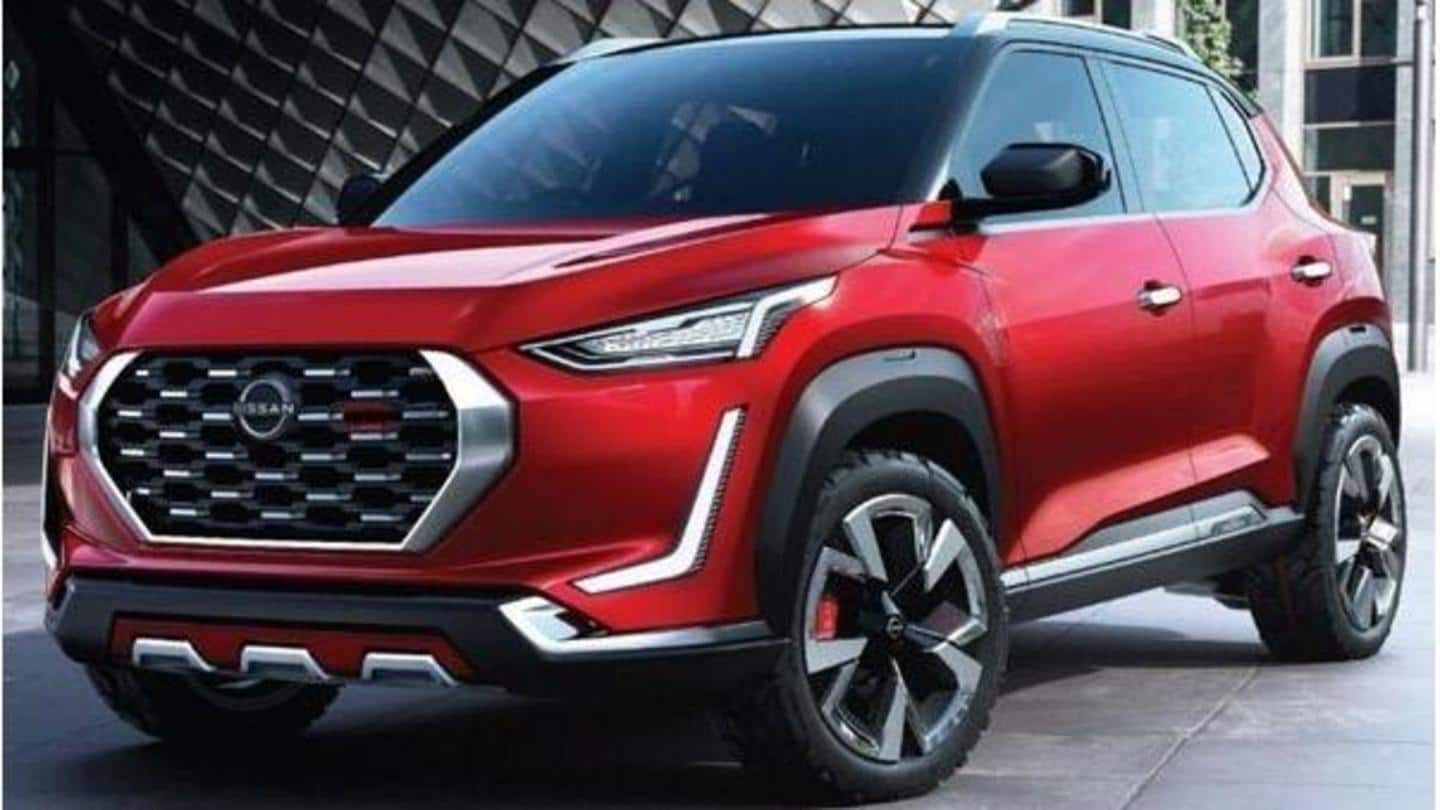
The Nissan Magnite crossover has a dual-tone cabin with a fully-digital octagonal instrument console, octagonal air conditioning vents, sporty mono-form seats, connected car tech, and a 360-degree parking camera.

Nissan Magnite: At a glance

The Nissan Magnite has a sporty look, featuring a chrome-finished octagonal-shaped grille, a muscular bonnet with sculpted lines, and a designer skid plate. For lighting, it has LED headlamps with L-shaped DRLs.

On the sides, the sub-compact SUV is flanked by silvered roof rails, blacked-out B-pillars, ORVMs, wheel arches, chrome-covered door handles, and eye-catching alloy wheels. 

Power and performance

The Nissan Magnite draws power from a BS6-compliant 1.0-litre turbo-charged petrol mill that belches out 99hp of maximum power and 160Nm of peak torque. The transmission duties on the sub-compact SUV is handled by a 5-speed manual or CVT automatic gearbox.

A peek inside the cabin

The Nissan Magnite has an all-black cabin with a red-panelled dashboard, mono-form seats, automatic AC, and a multifunctional steering wheel.

The crossover also packs a fully-digital instrument panel and an 8-inch touchscreen infotainment console with support for connected car technology.

On the safety front, it offers multiple airbags and a 360-degree parking camera.

.

.

.

Info sourced from https://www.newsbytesapp.com/

Design a site like this with WordPress.com
Get started